Drain log
Drain cleaning in Springdale and Northwest Arkansas
A slow sink and a backing-up main line are not the same job. We work out which one you have, clear it with equipment sized to the pipe, and tell you why it clogged.
Chapter 01
Which drain is actually clogged
A kitchen sink that drains slow is usually grease. A tub that holds an inch of gray water is usually hair and soap. Those are one-fixture problems, and a cable run through the trap or the branch line clears them. The first thing we sort out on a call in Springdale is whether it is one fixture or the whole house.
A toilet that gurgles when the washer drains, or a basement floor drain that burps, is a different story. That is air and water fighting for room in the main line. Snaking the sink will not touch it, and neither will a bottle of drain cleaner. The clog sits farther down, and the fix starts there.
Here is a quick test. Run the water in the sink farthest from the main and watch the lowest drain in the house. If the tub or floor drain on the ground level backs up first, the blockage is in the main line. That one detail tells a plumber where to put the cable before anything comes off the wall.
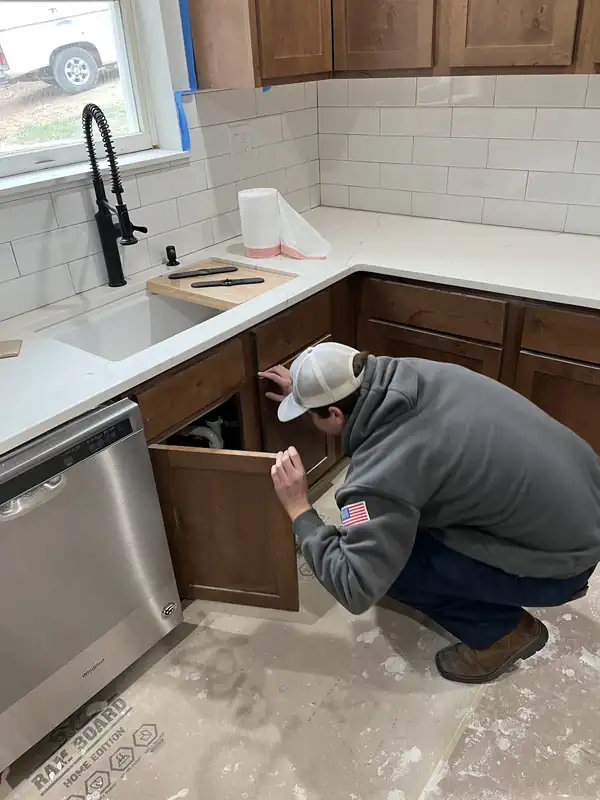
A Stith plumber kneeling under a new kitchen sink to work on the drain and supply lines
Cable, machine and the right size for the line
Drain work is mostly a question of matching the tool to the pipe. A small cable suits a bathroom sink. A heavier machine is built for a four-inch main. Too big a cable in a small line chews at the pipe, and too small a cable only pokes a hole through the clog and leaves the rest behind. The tech chooses after looking at the line.
We find the clog first, then clear it, then run water to prove the line moves. Tad Moore wrote this on Google about a pipe backing up into his house: “Zach was incredibly helpful (and resilient) to help us figure out a clogged pipe that was backing up into the house.” That is the job, figuring it out before reaching for the biggest machine.
Zach also did something worth repeating. The evening before he came, Tad says, he “was kind enough to share tips over the phone on how I might be able to fix it myself, then called back the next morning to check in.” Some clogs a homeowner can try first. We would rather tell you which, and come out when it needs equipment.
Chapter 03
When the same drain clogs twice
A line cleared twice in one year has a reason. Roots work into the joints of older clay and cast iron pipe. A low spot in the pipe, called a belly, lets waste settle and build up. Scale narrows old cast iron from the inside. Grease cools and hardens past the point where a cable can fully scrape it away.
When we suspect one of those, we stop clearing and start looking. A camera on a cable shows the inside of the line, so the next step is based on what is actually down there. Sometimes the answer is a section of pipe, and that work is covered on our sewer line repair page.
Older neighborhoods in Springdale, Rogers and Fayetteville tend to have older pipe in the ground, because the line is as old as the street. Newer homes clog too, usually from grease, wipes and a few years of kitchen habits, and those are the easiest to fix for good once the cause is clear.
What goes down the drain after we leave
Grease is the big one. It goes down hot and liquid and sets up cold, a few feet down the line. Wipes labeled flushable are not, and coffee grounds pack like sand. A hair catcher in the tub is cheap insurance against a service call. None of this is complicated, which is exactly why it gets ignored.
Gary Stith holds Master Plumbing License MP4210, and the shop that sends a tech to clear your tub also runs a separate Commercial Plumbing Division for restaurants, offices and shops. Different building, same habits: find the cause, clear the line, and tell the owner what keeps it clear.
The office takes calls Monday through Saturday, 7 AM to 7 PM, and the same number reaches the 24/7 emergency line when a drain backs up at night. The company was founded in 1965 by Gary's father and uncle on one idea: stand behind every job. That still applies to a kitchen sink.
Master Plumbing License MP4210. Family-owned since 1965. Call (479) 751-9691.