Seasonal checks
AC and furnace tune-ups in Springdale, AR
AC in spring, furnace in fall. One visit a year that keeps efficiency up, keeps breakdowns down and catches the small faults before they strand you.
Chapter 01
The slow slide before the hottest and coldest days
Heating and cooling systems rarely fail all at once. A coil collects dust and the air gets a little warmer. A capacitor weakens and the motor starts a little harder. A condensate drain half clogs. A flame sensor gets a film on it and the furnace lights, then quits, then lights again. None of it announces itself, and the system keeps limping along until the day it is asked to do the most.
That day is almost always the one you can least afford. The hottest afternoon of summer, the coldest night of a January cold snap, a weekend when every other shop has the phone off. Stith's own line on tune-ups is that annual maintenance improves efficiency, reduces breakdowns and extends system life. It is a boring answer, and it is the true one. Once a year is the rule, and the best time is before the season starts, not after it fails.
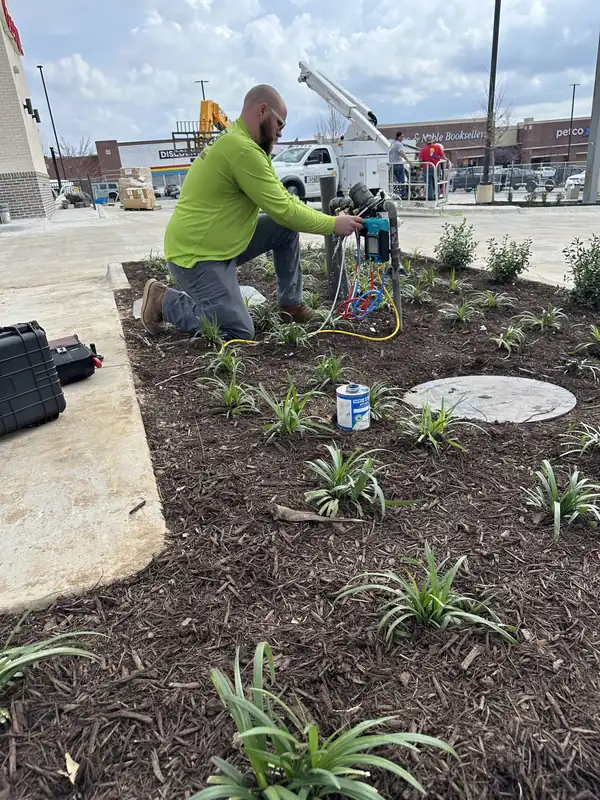
A Stith technician with refrigerant gauges checking a system's charge
What the technician actually checks, in spring and in fall
On the cooling side, the spring visit is about the outdoor unit and the refrigerant circuit. The coil is cleaned and checked for damage. The charge is read with gauges. The electrical connections, the contactor and the capacitor are tested. The blower, the filter and the condensate drain are looked at, because a clogged drain is one of the most common reasons an AC shuts itself off.
On the heating side, the fall visit looks at the burners, the igniter and the flame sensor, along with the flue, the gas connections and the safety controls. The technician checks the heat exchanger and airflow, and tests that the furnace starts, runs and shuts off the way it should. Stith's own FAQ puts it in one sentence: AC tune-ups in spring, furnace tune-ups in fall.
None of this takes all day, and none of it needs a dozen parts. It is a trained set of eyes and a set of gauges, run through the same order every visit. If your home heats with a boiler or radiant floors instead of a furnace, Stith also holds Boiler License 11305, so the same shop can look after that system too.
Chapter 03
A visit that catches the small stuff
Albert Lew wrote on Stith's homepage that his heater would not climb past 66 degrees in the middle of a cold snap. Ridge “immediately saw that it was just a matter of blocked circulation.” That is the kind of thing a tune-up finds in April or October, not in the middle of the coldest week of the year.
Trudy Quinn wrote that her technician cleaned her outdoor unit and took a picture before and after. Seeing the photo is the whole point. A tune-up is not a mystery, and the homeowner should leave knowing what was found, what was done and what to watch for.
You have a part in it too. Change the filter on schedule, keep the outdoor unit clear of leaves, grass and cottonwood, and do not stack furniture over return vents. Those three habits cost nothing and take real strain off a system that is already working hard through a Northwest Arkansas summer.
Gas, flue and the fall safety check
A furnace burns gas and sends the exhaust out through a flue, so the fall visit is also a safety check. A technician looks at the flue for gaps or rust, checks the gas connections and confirms the burners light cleanly. If a smell of gas ever shows up between visits, leave the house and call from outside.
Carbon monoxide alarms belong on every floor that has a bedroom, and their batteries belong on the fall list. Stith's team brings Universal EPA certification, HVAC/R registration and a master plumber's gas knowledge to the job, which is the right mix for a system that mixes fuel, fire and airflow in a closet.
HVAC/R Registrant 1056339 and Boiler License 11305, on a family-owned shop since 1965. Call (479) 751-9691.